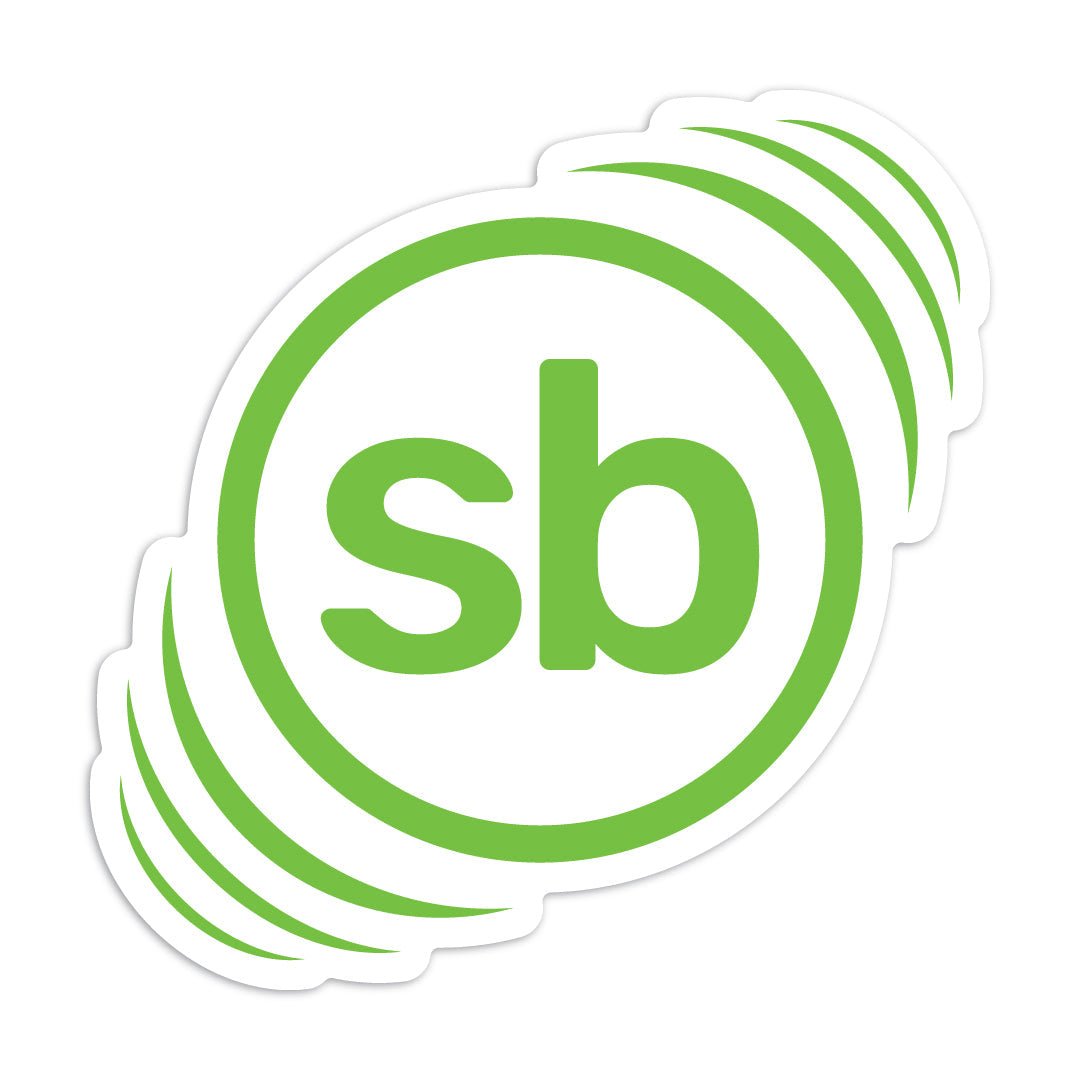
Custom die-cut stickers are cut all the way through the backing, which means the sticker matches your design's exact shape. No border. No rectangular frame around your artwork. Just the outline of whatever you designed, clean against whatever surface it lands on.
That distinction changes how a sticker reads. A shape that follows your logo looks deliberate. The same artwork sitting inside a square looks like an afterthought.
Here's where die-cuts actually earn their keep.
On Product Packaging

Sealing a box, bag, or mailer with a die-cut version of your logo is one of the cheaper ways to make packaging look considered without paying for fully custom-printed boxes. A 2"x3" die-cut sticker on a plain kraft mailer goes a long way toward making an order feel intentional.
This works especially well for small e-commerce brands and independent sellers who can't justify a large packaging budget. The sticker closes the box and handles the branding in one shot. There's a fuller breakdown of how die-cut stickers for e-commerce brands put them to work beyond just the seal.
As Brand Giveaways
Die-cut stickers get kept in a way that rectangular promotional items don't. One shaped like your logo or mascot is the kind of thing that ends up on a laptop lid or water bottle. Plain rectangles with a business name on them end up in a drawer.
Standard vinyl stickers have a five-year life expectancy with no fading and are dishwasher safe. For something that costs pennies per unit, that's a long runway on someone's belongings. Stickerbeat's minimum order is 50 stickers, manageable enough to test a design before committing to a larger run.
At Events and Markets
Craft fairs, pop-up shops, farmers' markets. Die-cut stickers work well in these settings because people genuinely want them. Hand someone a shaped sticker, and they'll actually look at it. Hand them a square one, and they'll pocket it without a second glance.
One thing worth deciding before you order event distribution: if you're handing stickers out quickly to a lot of people, kiss-cut sheets are faster to peel and apply. Die-cuts on individual backing offer a cleaner presentation. Kiss cuts are the better logistics. Decide which matters more for your situation before you place the order.
On Vehicles and Windows

Die-cut is the standard for vehicle decals and window graphics. No border means nothing is competing visually with the glass or paint around the sticker. Vinyl handles sun, rain, and car washes without peeling or fading, which is why it's the right material for outdoor and vehicle applications.
At larger sizes, these are closer to signage than personal-use stickers. Material choice matters more at that scale than it does for a laptop sticker.
On Products as Labels (With a Caveat)
Die-cut stickers can work as product labels on lower-volume runs where you're applying them by hand. But if you're labeling food, beverage, or personal care products at any real scale, BOPP roll labels are the better fit. BOPP resists water, oil, scratches, and UV, which matters when a product sits in a refrigerator or on a bathroom shelf.
For small-batch products or limited runs, die-cuts on vinyl hold up fine. Just know there's a more purpose-built option if your volume grows.
A Few Design Notes Before You Order
Complex shapes with very thin extensions or tight details can cause cutting problems. A logo with spindly letterforms or narrow parts that extend far from the main shape needs simplifying before it becomes a production issue. The mockup phase is the right time to catch that. Stickerbeat offers unlimited free mockup revisions after checkout, so use that process to confirm the cut path looks right before anything goes to print.
Gloss lamination suits die-cut stickers well because it makes colors pop, and the surface holds up to handling. Matte works if your aesthetic calls for it, though colors read softer. Neither is wrong. It depends on what the sticker is supposed to look like on the surface where it's going.